
Precision CNC Machining: Ultimate Guide to High-Tolerance Custom Parts (2026)
In modern advanced manufacturing, precision CNC machining has become the backbone of high-end industrial production. From miniature medical implants to aerospace structural components, automotive sensors to optical equipment parts, ultra-precise mechanical parts determine product stability, service life and operational safety. As global manufacturing supply chains raise tolerance requirements year by year, engineers and procurement managers are struggling to find qualified custom CNC machining suppliers with stable precision, strict quality inspection and cost-effective production.
This blog explains everything about precision CNC machined parts: core definition, key machining standards, applicable materials, mainstream processes, industry applications, common manufacturing pain points and professional selection tips. Optimized for industrial search intent, this guide helps you cut supplier screening costs and avoid defective part risks.
What Is Precision CNC Machining?
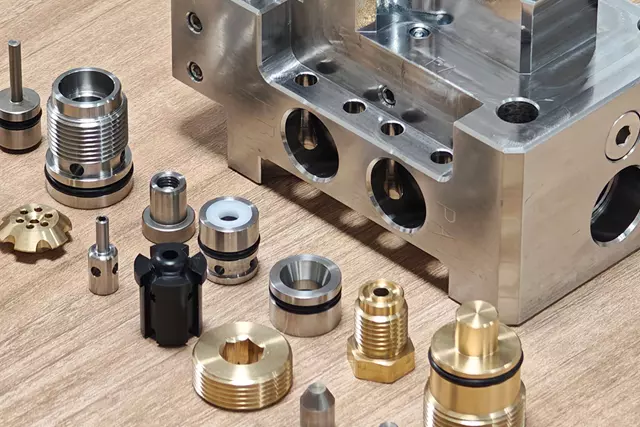
Common standard CNC machining controls dimensional tolerance within ±0.05mm, while precision CNC machining refers to subtractive manufacturing processes that deliver ultra-tight tolerance from ±0.001mm to ±0.01mm. It utilizes computer numerical controlled multi-axis machine tools, including CNC mills, CNC lathes, grinders and EDM machines, to remove material from solid blanks and fabricate customized mechanical parts.
Different from ordinary machining services, precision CNC manufacturing focuses on three core indicators: microscopic dimensional accuracy, surface roughness consistency and geometric tolerance qualification. Qualified precision parts require zero burrs, uniform surface finish and stable roundness, perpendicularity and parallelism.
Key Processes for Precision CNC Parts Manufacturing
High-precision parts cannot rely on single processing equipment. Formal manufacturers adopt combined machining workflows to eliminate machining deformation and tool wear errors. We sorted four mainstream industrial-grade precision CNC processes for B2B buyers:
1. 5-Axis CNC Milling
5-axis linkage machining is the mainstream solution for complex curved precision parts. Compared with 3-axis CNC milling, it processes five sides of workpieces in one clamping, effectively reducing repeated positioning errors. It is widely used for irregular structural parts, optical fixtures and turbine components, with minimum tolerance up to ±0.002mm.
2. Precision CNC Turning
Suitable for rotary symmetrical parts such as shafts, bolts, sleeves and bearings. High-precision spindle lathes equipped with dynamic balance calibration can achieve Ra 0.2μm surface roughness. This process is the most cost-effective for mass production of cylindrical industrial parts.
3. Wire Cut & EDM Machining
For ultra-hard metal materials and tiny slotted structures that cannot be cut by milling tools, electrical discharge machining removes materials via high-frequency electric sparks. It causes no mechanical extrusion deformation, perfect for thin-wall precision parts and mold core components.
4. Ultra-Precision Grinding
As post-processing procedure, fine grinding corrects tiny deformation after rough machining. It optimizes surface finish and controls roundness deviation, mandatory for medical parts and automotive engine components that require high wear resistance.
Best Materials for Precision CNC Machined Parts
Material selection directly decides machining difficulty, tolerance stability and component service life. Blindly choosing low-cost materials leads to thermal deformation, rusting and dimensional drift after production. Below are widely verified materials for industrial precision CNC parts:
Metal Materials
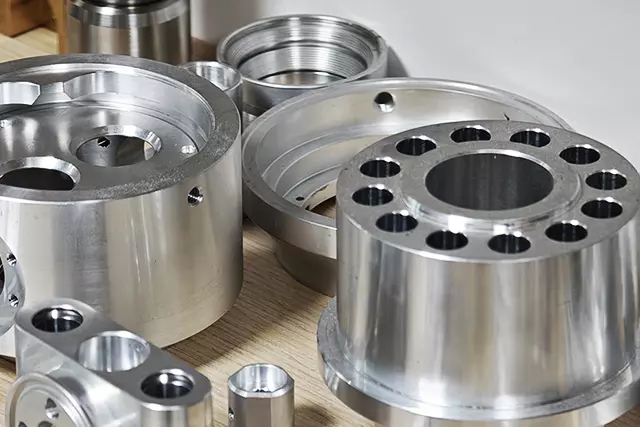
• Aluminum Alloy (6061, 7075): Low density, good cutting performance, low thermal deformation. Ideal for automation fixtures and aerospace lightweight parts; 7075 features higher tensile strength for load-bearing components.
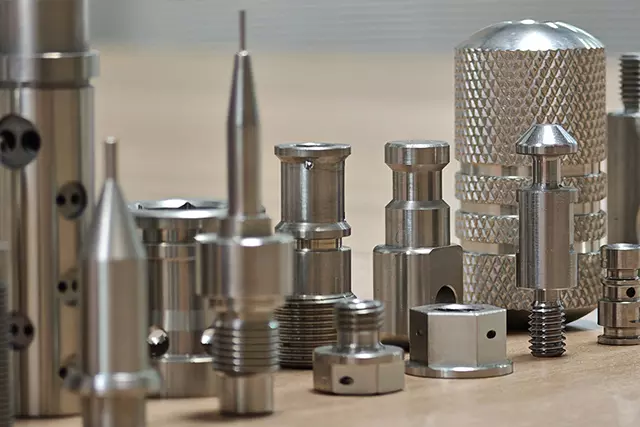
• Stainless Steel (304, 316L): Corrosion-resistant, medical and food-grade compliant. Mainly used for surgical equipment parts and fluid transmission components.
• Titanium Alloy: Ultra-light and high-strength, biocompatible. Top choice for medical implants and aviation parts, with high machining difficulty and strict tool requirements.
• Brass & Copper: Excellent thermal conductivity, smooth surface after processing, suitable for electronic conductive precision parts.
Engineering Plastic Materials
• PEEK, POM, PC: Low friction coefficient, insulation performance, anti-corrosion. Used for electronic insulating parts and laboratory precision jigs.
Top Industrial Applications of Precision CNC Parts
High-precision CNC components penetrate high-value manufacturing industries, and each vertical field has customized tolerance and certification requirements:
1. Medical Device Industry
Medical-grade CNC parts require non-toxic materials, mirror-level surface finish and zero sharp edges. Typical products: surgical instrument connectors, orthopedic fixture parts, diagnostic equipment shells. All manufacturing procedures follow ISO 13485 medical manufacturing standards to avoid biological rejection risk.
2. Aerospace & Aviation
Aerospace precision parts demand extreme temperature resistance and fatigue resistance. Tolerance must be strictly locked within ±0.003mm to prevent mid-air mechanical failure. Common products: engine casing accessories, satellite structural parts, drone transmission components.
3. Automotive New Energy
New energy vehicle motor shells, battery conductive terminals and brake precision valve parts need anti-vibration and heat dissipation properties. Stable dimensional tolerance reduces assembly gap and lowers vehicle failure rate.
4. Automation & Semiconductor
Semiconductor jigs and vacuum chamber accessories belong to ultra-precision CNC products. Dust-free production environment and low-residue processing are required to avoid chip contamination affecting wafer production.
Why Do Most CNC Suppliers Fail Precision Machining Requirements?
After cooperating with dozens of overseas industrial clients, we summarized 4 common defects causing precision parts disqualification, which are also core pain points of global procurement:
1. Machine Tool Aging: Old 3-axis CNC equipment has spindle runout deviation, unable to stabilize tolerance below ±0.02mm
2. Lack of Temperature Control Workshop: Metal expands with heat. Workshop temperature fluctuation over 5℃ causes invisible dimensional drift after parts delivery
3. Simplified Quality Inspection: Small factories only use vernier calipers for detection, ignoring CMM three-coordinate testing for geometric tolerance
4. Unprofessional Post-Processing: Improper deburring and anodizing damage original precision, causing assembly jamming
Our Precision CNC Quality Control Workflow (E-E-A-T Authority Proof)
Google values manufacturing content with verifiable industrial standards. To guarantee batch consistency of custom CNC parts, we execute full-link standardized inspection, fully compliant with ISO 9001 manufacturing certification:
1. Pre-Production Verification: Analyze CAD/STEP drawings, check machining feasibility, calibrate 5-axis CNC spindle and ambient temperature locked at 22℃±1℃
2. Mid-Production Sampling Test: Stop production for the first 3 finished parts, conduct dimensional inspection and tool compensation adjustment
3. Final Full Inspection: Adopt CMM, roughness meter, roundness tester for full data detection, generate official inspection report
4. Vacuum Packaging & Shipping: Anti-rust vacuum packaging to avoid oxidation deformation during international logistics
FAQ (Google Featured Snippet Optimization)
Q1: What is the difference between standard CNC and precision CNC machining?
Standard CNC tolerance ranges from ±0.05mm to ±0.1mm, for ordinary mechanical accessories; precision CNC tolerance reaches ±0.001~±0.01mm, equipped with constant-temperature workshop and professional precision testing equipment, applied for high-end industrial fields.
Q2: What file formats do custom CNC parts need to provide?
We support STEP, IGES, CAD, DXF and STL files. 3D engineering drawings are preferred to avoid dimensional misunderstanding; 2D drawings must mark clear tolerance and surface roughness requirements.
Q3: How long is the lead time for precision CNC parts?
Simple structural precision parts: 5-7 working days; complex 5-axis machining parts + official inspection report: 10-14 working days. Emergency orders support priority production.
Q4: Can you provide material certification and inspection documents?
Yes. We provide original material certificate, dimension inspection report, surface roughness test record and ISO qualification documents, fully meeting overseas customs clearance and client factory audit requirements.
Final Thoughts
Precision CNC machined parts are never simple cutting work. Reliable ultra-precision manufacturing relies on standardized equipment, temperature-controlled production, strict quality inspection and industrial-rich engineering experience. Choosing an unqualified low-cost supplier will bring hidden risks such as product recall, project delay and certification failure, which costs far more than machining expenses.
If you need custom precision CNC machining services, from drawing evaluation, material selection to batch production and full inspection reports, our engineering team provides one-stop B2B manufacturing solutions. Send your CAD drawings now for a free quotation and technical feasibility assessment.